The GLP-1 Side Effect Playbook: Managing Nausea, Constipation, Hair Shedding, Alcohol, Birth Control, and Surgery Risk
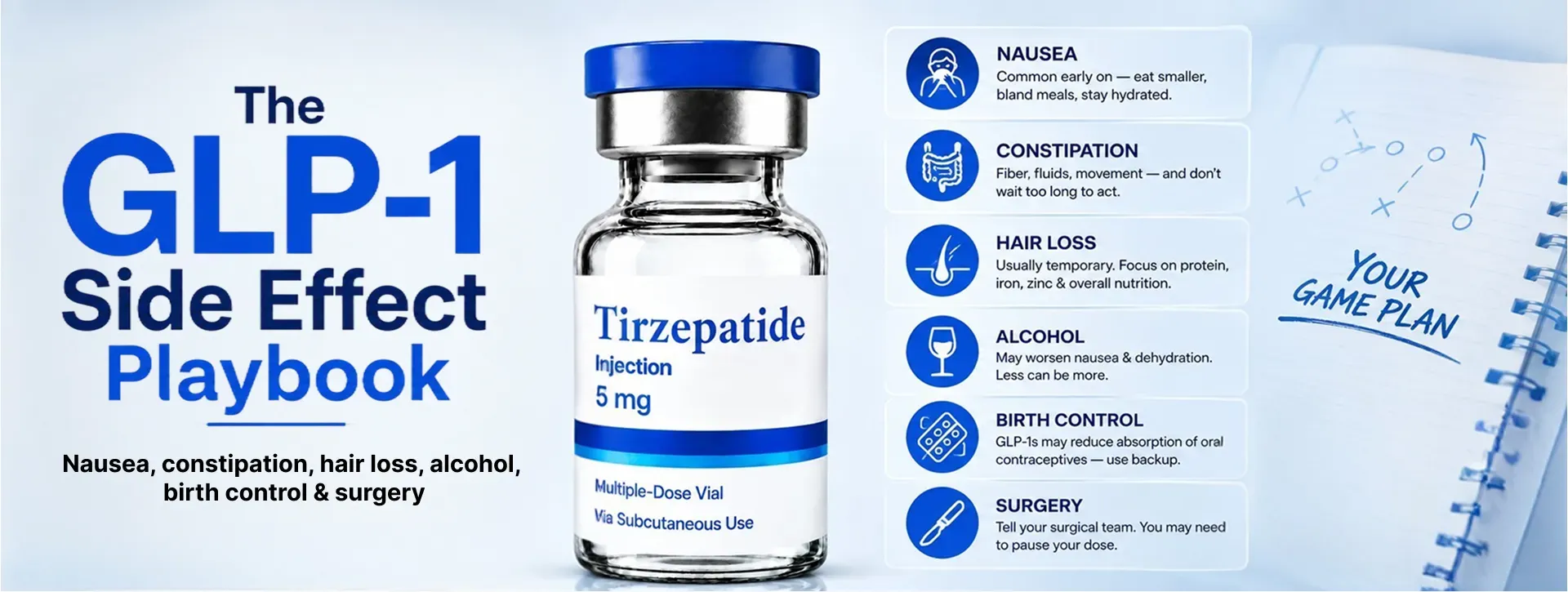
GLP-1 receptor agonists - Semaglutide and Tirzepatide - have moved from specialty prescription to mainstream metabolic medicine faster than almost any drug class in recent memory. Patients seeking a reliable glp weight loss treatment are drawn to the significant, sustained results and metabolic improvements these medications can deliver. But for many, the path to those results runs through a predictable stretch of side effects: nausea in the first few weeks, constipation that lingers, unexpected hair shedding a few months in, and a handful of situational questions that rarely come up in a five-minute prescribing conversation - alcohol tolerance, birth control effectiveness, and surgical safety.
Side effects, not a lack of efficacy, are the number one reason patients pause or discontinue GLP-1 therapy before reaching their goals. This playbook is built to change that. It walks through what's happening physiologically at each stage of treatment and gives you a clear, actionable plan for managing it - so you can stay on track comfortably and safely.
At My Med Provider, every treatment plan starts with a licensed physician consultation and continues with ongoing clinical support, medications sourced through US-licensed compounding pharmacies, and direct-to-door delivery. That structure exists specifically so that the side effects below don't have to be navigated alone.
Gastrointestinal Side Effects: Taming Nausea and Constipation
Quick answer: Nausea and constipation are the two most common GLP-1 side effects, and both stem from the same mechanism - delayed gastric emptying. Slower titration, dietary adjustments, hydration, and targeted supplementation resolve most cases within the first several weeks of treatment.
Why GLP-1 Medications Cause Nausea
Semaglutide and Tirzepatide work in part by slowing gastric emptying - the rate at which food leaves your stomach. This helps you feel full longer and supports appetite regulation, but it also means food sits in the stomach longer than usual, which can trigger nausea, especially in the first few weeks after starting treatment or increasing to the next dose level.
Practical Fixes for Nausea
• Follow your titration schedule exactly as prescribed. Dose increases, not the starting dose, are the most common trigger for nausea - resist the urge to escalate faster than your provider recommends.
• Eat smaller, more frequent meals instead of three large ones, and stop eating before you feel full.
• Avoid high-fat, greasy, or heavily fried foods, which slow gastric emptying further and can worsen nausea.
• Stay ahead of dehydration with water and electrolytes, particularly if nausea reduces your appetite for food and fluids.
• Try ginger or peppermint in tea, candies, or supplement form - both have mild antiemetic properties.
• Avoid lying down immediately after eating; staying upright for 30–60 minutes can reduce reflux-related nausea.
Why GLP-1 Medications Cause Constipation
The same slowdown in gastric emptying extends further down the digestive tract, reducing intestinal motility. Combined with reduced food and fluid intake from appetite suppression, this creates the conditions for constipation - one of the most persistent GLP-1 side effects for many patients.
A Simple Constipation Protocol
· Build up soluble fiber: Aim for 25–30 grams per day from sources such as chia seeds, lentils, oatmeal, or an over-the-counter fiber supplement. Introduce it slowly to avoid bloating.
· Maintain steady fluid intake: Sip water throughout the day. Ample hydration enables fiber to add bulk and helps osmotic laxatives function effectively.
· Use short-term magnesium: Over-the-counter options like magnesium citrate draw moisture into the gastrointestinal tract, making stools easier to pass.
• Liquids: Drink with a complete 8-ounce glass of water according to package instructions.
• Powders or Capsules: Suitable for gentle, routine bowel management as needed.
· Precaution: Limit magnesium-based laxatives to short-term relief unless cleared by your clinician. Patients with compromised kidney function should avoid them.
• Build in daily movement, even light walking, which helps stimulate intestinal motility.
• Use an over-the-counter stool softener or osmotic laxative if the steps above aren't enough after a few days - check with your provider before using laxatives regularly.
• Flag persistent constipation to your care team if it lasts more than a week or comes with significant abdominal pain.
Hair Shedding on GLP-1 Therapy: What's Actually Happening
Quick answer: Hair shedding on GLP-1 therapy is typically telogen effluvium - a temporary, diffuse shedding pattern triggered by rapid weight loss and caloric deficit, not a direct effect of Semaglutide or Tirzepatide on the hair follicle. It is almost always reversible.
It can be alarming to notice more hair in the shower drain or on your pillow a few months into treatment. It's important to understand this is not typically caused by the medication itself acting on the scalp or hair follicles. Instead, it's most often telogen effluvium: a well-documented physiological response to any significant, rapid change in body weight, caloric intake, or metabolic stress. When the body perceives a sudden energy deficit, it can shift a larger-than-usual share of hair follicles from their growth phase into a resting phase, leading to increased shedding roughly two to four months after the triggering event.
Protecting and Restoring Your Hair
• Prioritize adequate protein intake. Hair is largely structural protein; inadequate intake during rapid weight loss is one of the most common contributing factors to shedding.
• Ask your provider about checking key micronutrients - iron, zinc, vitamin D, and biotin are the ones most commonly implicated in diet-related hair thinning.
• Avoid layering restrictive crash dieting on top of GLP-1 therapy; pair your medication with balanced, adequate-calorie nutrition rather than aggressive caloric restriction.
• Set realistic expectations. Weight-loss-related telogen effluvium typically resolves on its own within six to nine months as the hair growth cycle normalizes.
• Consider a strengthening or scalp-support routine in the meantime, and talk to your provider if shedding is severe, sudden, or shows no signs of slowing after several months.
GLP-1 Medications and Alcohol: What Changes
Quick answer: GLP-1 medications can alter alcohol tolerance by reducing reward-driven cravings, slowing alcohol absorption, and increasing sensitivity to its effects. They may also raise the risk of hypoglycemia and, in rare cases, pancreatitis when alcohol is combined with GLP-1 therapy.
Many patients notice their relationship with alcohol shifts after starting a GLP-1 medication - often reporting less interest in drinking, or feeling the effects more quickly than before. This isn't purely psychological. GLP-1 receptor agonists act on reward pathways in the brain that overlap with those involved in alcohol cravings. At the same time, delayed gastric emptying changes how quickly alcohol is absorbed, which can intensify or unpredictably alter its effects.
There are also physiological safety considerations worth taking seriously:
• Hypoglycemia risk: Alcohol can lower blood sugar, and combining it with a GLP-1 medication - particularly alongside reduced food intake - can compound that effect.
• Pancreatitis risk: Both heavy alcohol use and GLP-1 medications have been independently associated with pancreatitis in rare cases; combining significant alcohol intake with GLP-1 therapy is not advisable.
• Dehydration: Alcohol is dehydrating, and so is a reduced-appetite, lower-fluid-intake state - stacking the two increases the risk of dizziness and fatigue.
Guidelines for Safer Social Drinking
• Eat before and while drinking to reduce hypoglycemia risk and slow alcohol absorption.
• Alternate alcoholic drinks with water.
• Set a lower limit than you might have pre-treatment - many patients find they want less, and that's worth listening to.
• Avoid drinking on an empty stomach, especially during dose titration.
• Talk to your provider if you have a history of heavy alcohol use, as your treatment plan may need additional monitoring.
GLP-1 Medications and Oral Birth Control Effectiveness
Quick answer: Delayed gastric emptying from GLP-1 medications, particularly during Tirzepatide dose increases, can reduce the absorption and effectiveness of oral contraceptives. A backup, non-oral method of contraception is generally recommended during initiation and dose escalation.
Oral contraceptives depend on consistent, predictable absorption through the digestive tract to maintain effective hormone levels. Because GLP-1 medications - especially Tirzepatide - slow gastric emptying, the absorption timing and completeness of oral medications taken alongside them, including birth control pills, can be affected. This effect appears most pronounced during dose escalation, when gastric slowing is most significant, and tends to lessen once a stable maintenance dose is reached.
Protecting Contraceptive Effectiveness
• Use a backup, non-oral method of contraception (such as condoms) during the initial weeks of treatment and following any dose increase.
• Consider discussing non-oral hormonal options with your provider - such as an IUD, implant, or patch - if you anticipate frequent dose adjustments.
• Take oral contraceptives consistently at the same time each day to minimize additional variability.
• Flag any missed periods, breakthrough bleeding, or signs of possible contraceptive failure to your provider promptly.
• Never assume protection is unaffected - this interaction is a documented consideration, not a rare edge case, and deserves a proactive plan rather than an after-the-fact conversation.
GLP-1 Medications, Surgery, and Anesthesia Safety
Quick answer: GLP-1 medications slow gastric emptying, which can leave food and liquid in the stomach longer than expected before surgery - raising the risk of pulmonary aspiration under general anesthesia. Current guidance recommends holding GLP-1 medications for a period before elective procedures.
This is the most clinically significant safety consideration in this playbook, and one every GLP-1 patient should discuss with both their prescribing provider and their surgical or anesthesia team before any elective procedure - including routine outpatient procedures like colonoscopies or dental work under sedation. Because GLP-1 medications delay gastric emptying, standard pre-operative fasting guidelines may not be sufficient to ensure an empty stomach, increasing the risk of regurgitation and pulmonary aspiration during general anesthesia or deep sedation.
Current Guidance on Pausing GLP-1 Therapy Before Procedures
• Tell every member of your care team that you're taking a GLP-1 medication - your prescribing provider, your surgeon, and your anesthesiologist - well before any scheduled procedure.
• Expect to be asked about your dosing schedule, including your most recent dose and any recent GI symptoms like nausea, vomiting, or reduced appetite.
• Follow your anesthesia team's specific pre-operative instructions, which may include holding your GLP-1 medication for a defined period and/or a clear-liquid diet the day before your procedure.
• Do not resume dosing after surgery until you've discussed timing with your care team.
• Raise this even for minor or outpatient procedures involving sedation, not just major surgery.
Why Clinical Oversight Matters When Managing Side Effects
Every scenario in this playbook has one thing in common: the right response depends on your individual history, your current dose, and close communication with a provider who actually knows your treatment plan. Generic advice can only take you so far.
My Med Provider is built around that principle. Every patient works with a licensed physician who reviews dosing decisions, adjusts titration schedules when side effects are significant, and stays reachable as new questions come up - whether that's a nausea flare-up in week two or a scheduled surgery six months into treatment. Medications are dispensed through US-licensed compounding pharmacies, giving your provider the flexibility to offer both subcutaneous injection and oral dissolve tablet formulations, depending on which fits your lifestyle, tolerance, and side-effect profile best. If you decide to buy semaglutide injection online, every step of the process - consultation, prescribing, pharmacy fulfillment, and follow-up - is handled under a HIPAA-compliant, LegitScript-certified telehealth model.
If you're managing side effects on a current GLP-1 treatment plan, or considering starting Semaglutide or Tirzepatide, schedule an online consultation with My Med Provider to get a personalized plan, clinical support, and direct access to a licensed provider every step of the way.
Frequently Asked Questions
Do GLP-1 side effects get better over time?
Yes. Most gastrointestinal side effects, including nausea and constipation, improve significantly within the first several weeks at a given dose as the body adjusts, and often improve further once a maintenance dose is reached.
Should I stop my GLP-1 medication if I have side effects?
Don't stop or adjust your dose on your own. Contact your prescribing provider first - many side effects can be managed by slowing titration, adjusting supportive care, or, in rare cases, switching formulations.
Is hair loss from GLP-1 medications permanent?
No. Hair shedding linked to GLP-1-related weight loss is typically telogen effluvium, a temporary condition that resolves as the body adjusts to its new weight and nutritional status.
Can I drink alcohol while taking Semaglutide or Tirzepatide?
In moderation and with food, most patients can continue to drink, but tolerance often changes and certain risks - like hypoglycemia - are heightened. Talk to your provider about what's appropriate for you.
This article is for general educational purposes and is not a substitute for individualized medical advice. Compounded Semaglutide and Tirzepatide are prepared by licensed pharmacies under a valid prescription; they are not individually FDA-approved and are not generic versions of any branded medication. Always consult your prescribing provider before starting, stopping, or adjusting any medication or dosage.